MCQEasyJEE 2025Probability Basics

JEE Mathematics 2025 Question with Solution

A board has 1616 squares as shown in the figure. Out of these 1616 squares, two squares are chosen at random. The probability that they have no side in common is:
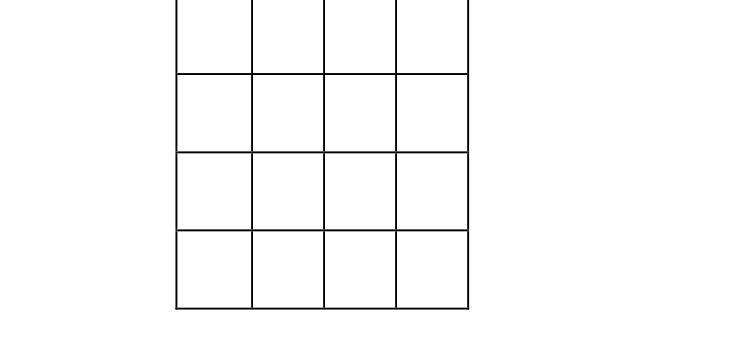
A square board divided into a 4 by 4 grid, forming 16 equal small squares with straight boundary lines.
  • A

    45\frac{4}{5}

  • B

    710\frac{7}{10}

  • C

    35\frac{3}{5}

  • D

    2330\frac{23}{30}

Answer

Correct answer:A

Step-by-step solution

Standard Method

Given: A board has 1616 squares arranged in a 4×44 \times 4 grid. Two squares are chosen at random.

Find: The probability that the chosen squares have no side in common.

Total number of ways to choose any two squares is

(162)=16×152=120\binom{16}{2} = \frac{16 \times 15}{2} = 120

Now count the pairs that share a side.

In each row of 44 squares, the number of adjacent horizontal pairs is 33. Since there are 44 rows, the number of horizontal adjacent pairs is

4×3=124 \times 3 = 12

Similarly, in each column of 44 squares, the number of adjacent vertical pairs is 33. Since there are 44 columns, the number of vertical adjacent pairs is

4×3=124 \times 3 = 12

So, total pairs sharing a side are

12+12=2412 + 12 = 24

Hence, the number of pairs having no side in common is

12024=96120 - 24 = 96

Therefore, the required probability is

96120=45\frac{96}{120} = \frac{4}{5}

So, the correct option is A.

Using complementary counting

Given: Two squares are selected from a 4×44 \times 4 grid.

Find: The probability that the two selected squares do not share a side.

Instead of counting all valid pairs directly, first count all possible pairs and then subtract the pairs that are adjacent.

All possible pairs:

(162)=120\binom{16}{2} = 120

Adjacent pairs occur only in two ways:

  1. horizontal adjacency
  2. vertical adjacency

For horizontal adjacency, each of the 44 rows contributes 33 adjacent pairs:

4×3=124 \times 3 = 12

For vertical adjacency, each of the 44 columns contributes 33 adjacent pairs:

4×3=124 \times 3 = 12

Thus, total adjacent pairs are

12+12=2412 + 12 = 24

So the favorable pairs are

12024=96120 - 24 = 96

Hence,

P=96120=45P = \frac{96}{120} = \frac{4}{5}

Therefore, the probability that the two chosen squares have no side in common is 45\frac{4}{5}.

Common mistakes

  • Counting diagonal-touching squares as sharing a side is incorrect because sharing only a corner does not mean sharing a side. Count only horizontal and vertical adjacent pairs.

  • Using the favorable count as 6464 is wrong because the adjacent pairs are 2424, so the non-adjacent pairs must be 12024=96120 - 24 = 96, not 6464.

  • Forgetting to count both horizontal and vertical adjacent pairs gives an incomplete total. Compute adjacency in rows and columns separately, then add them.

Practice more Probability Basics questions

Get unlimited AI-adaptive practice, mastery tracking, and an AI tutor that explains every step - free to start.

Related questions