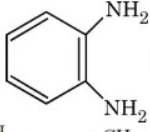
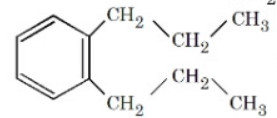
Statement I: Aniline can be synthesized from propylbenzene using simpler reagents in the order i) Acidic KMnO4, ii) Ammonia, iii) Bromine and alkali
Statement II: Aniline can be converted into 1,3,5-tribromobenzene using reagents in the order i) Bromine-H2O ii) NaNO2/HCl (0−5C) (iii) H3PO2.
In the light of the above statements, choose the correct answer from the options given below
A
Statement I is false but Statement II is true
B
Both Statement I and Statement II are false
C
Statement I is true but Statement II is false
D
Both Statement I and Statement II are true
Answer
Correct answer:D
Step-by-step solution
Standard Method
Given: Two synthetic sequences involving aniline, propylbenzene, and conversion to 1,3,5-tribromobenzene are to be checked.
Find: Which statement is correct.
For Statement I:
Propylbenzene undergoes side-chain oxidation with acidic KMnO4 to give benzoic acid. Benzoic acid on reaction with ammonia and heat gives benzamide. Hoffmann bromamide degradation using bromine and alkali converts benzamide into aniline.
Aniline reacts with bromine water to form 2,4,6-tribromoaniline. Diazotization with NaNO2/HCl at 0−5C converts the −NH2 group into a diazonium salt. Reduction with H3PO2 replaces the diazonium group by hydrogen, giving 1,3,5-tribromobenzene.
Therefore, both statements are correct and the correct option is D.
Stepwise Reaction Logic
Given: The truth of two reaction sequences must be evaluated.
Find: Whether each statement is true or false.
Statement I logic:
Any alkyl benzene having at least one benzylic hydrogen gives benzoic acid on strong oxidation with acidic KMnO4.
Benzoic acid with ammonia on heating forms benzamide.
Hoffmann bromamide degradation converts an amide to an amine having one carbon less in the carbonyl chain; thus benzamide gives aniline.
Hence the sequence is chemically valid.
Statement II logic:
Aniline is a strongly activating group, so bromine water gives 2,4,6-tribromoaniline.
On treatment with NaNO2/HCl at low temperature, the amino group is converted into the benzenediazonium group.
H3PO2 reduces the diazonium group to hydrogen.
Therefore, the amino substituent is removed and the product becomes 1,3,5-tribromobenzene.
Thus Statement II is also chemically valid.
Therefore, the correct option is D.
Common mistakes
Assuming side-chain oxidation of propylbenzene preserves the full propyl chain is incorrect. Acidic KMnO4 oxidizes the benzylic side chain completely to benzoic acid. Use benzylic oxidation rules for alkyl benzenes.
Thinking that ammonia converts benzoic acid directly into aniline is wrong. The intermediate formed on heating is benzamide, and only then Hoffmann bromamide degradation with bromine and alkali gives aniline.
Confusing the product of bromination of aniline with monobromination is a conceptual error. Because −NH2 strongly activates the ring, bromine water gives 2,4,6-tribromoaniline. Apply directing effects before predicting the product.
Assuming H3PO2 forms a substituted diazonium product instead of removing the diazonium group is incorrect. H3PO2 reduces Ar−N2+ to Ar−H. Use diazonium reduction chemistry here.
Practice more Phenols questions
Get unlimited AI-adaptive practice, mastery tracking, and an AI tutor that explains every step — free to start.