Given:
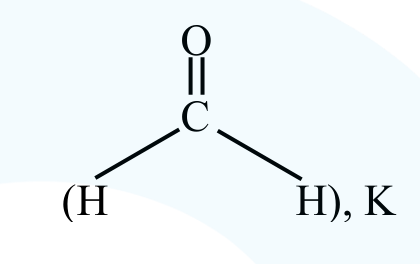
- Formaldehyde: K≈2280
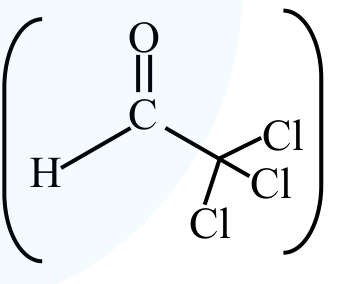
- Trichloroacetaldehyde: K≈2000
Find: Truth value of both statements.
The solution explains that the rate of hydration and the equilibrium constant depend on substituent effects on the carbonyl group. Small substituents favor nucleophilic attack because they reduce steric hindrance, while electron-withdrawing groups increase electrophilicity of the carbonyl carbon.
In formaldehyde, the carbonyl carbon is least hindered. Water can attack easily, so hydration is fast and strongly favored. Therefore the statement connecting small substituents with faster hydration is correct.
In trichloroacetaldehyde, the three chlorine atoms withdraw electron density through the inductive effect. This makes the carbonyl carbon more electron-deficient and more reactive toward hydration. Therefore the statement attributing the large K value to the −I effect of chlorine is also correct.
The second extracted solution text contains the phrase "making the carbonyl carbon less electrophilic," which contradicts the stated −I effect explanation and the final marked answer. The primary solution and the declared correct option both support that both statements are true.
Hence, the correct option is B.