MCQMediumJEE 2023Alcohols

JEE Chemistry 2023 Question with Solution

In the following reaction, 'B' is:
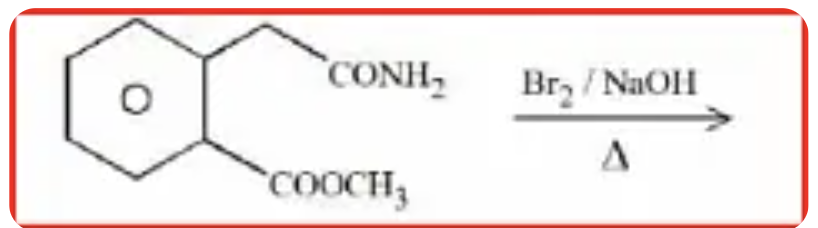
Reaction scheme showing a six-membered oxygen-containing ring attached to side chains bearing CONH2 and COOCH3 groups, treated with Br2/NaOH under heat to give product B.
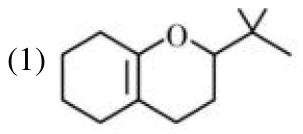
  • A
    Option 1 structure showing a fused bicyclic ether system with one double bond and an isopropyl substituent.
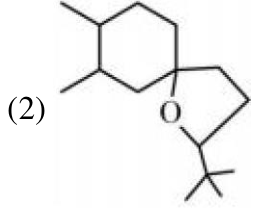
  • B
    Option 2 structure showing a substituted cyclic ether system with gem-dimethyl and tert-butyl-like substituents.
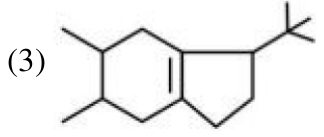
  • C
    Option 3 structure showing a fused bicyclic hydrocarbon with one double bond and an isopropyl substituent.
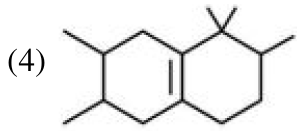
  • D
    Option 4 structure showing a fused bicyclic hydrocarbon with one double bond and alkyl substituents on both rings.

Answer

Correct answer:D

Step-by-step solution

Standard Method

Given: The compound is treated with Br2/NaOH\mathrm{Br_2/NaOH} under Δ\Delta.

Find: The structure of product B.

The reaction given involves the treatment of the compound with bromine and sodium hydroxide under heat. This is a classic example of the Hofmann Bromamide Degradation Reaction.

In this reaction, the amide group CONH2-CONH_2 undergoes degradation to form a primary amine NH2-NH_2 with loss of one carbon atom from the amide carbonyl carbon.

The ester group COOCH3-COOCH_3 remains intact during this reaction because it does not participate in the Hofmann bromamide degradation.

Therefore, the major product is the cyclohexanone derivative in which the CONH2-CONH_2 group is replaced by NH2-NH_2 while the COOCH3-COOCH_3 group remains unchanged. Hence, the correct option is D.

Reaction Insight

Given: Reagent set Br2/NaOH, Δ\mathrm{Br_2/NaOH,\ \Delta}.

Find: Which option matches the product formed.

Identify the principle: Hofmann bromamide reaction converts an amide into a primary amine having one carbon less than the parent amide.

Apply to the substrate:

  1. The side chain containing CONH2-CONH_2 is the reactive functional group.
  2. Under Br2/NaOH\mathrm{Br_2/NaOH}, this group is transformed to NH2-NH_2.
  3. The ester functionality COOCH3-COOCH_3 is retained.

Conclude: The product must be the structure consistent with amide-to-amine conversion without disturbing the ester group. Thus, the correct option is D.

Common mistakes

  • Mistake: Treating Br2/NaOH\mathrm{Br_2/NaOH} as a reagent that attacks the ester group first. Why it is wrong: the reaction conditions here are characteristic of Hofmann bromamide degradation, which acts on the amide functionality. What to do instead: identify the CONH2-CONH_2 group as the reacting group before checking the rest of the molecule.

  • Mistake: Forgetting that Hofmann bromamide degradation gives an amine with one carbon less. Why it is wrong: the carbonyl carbon of the amide is lost during rearrangement. What to do instead: convert CONH2-CONH_2 to NH2-NH_2 after accounting for the loss of the amide carbonyl carbon.

  • Mistake: Assuming all functional groups change under strongly basic conditions. Why it is wrong: the solution explicitly indicates that the ester group remains intact in this reaction. What to do instead: change only the amide-derived portion and preserve the ester group while matching the final structure.

Practice more Alcohols questions

Get unlimited AI-adaptive practice, mastery tracking, and an AI tutor that explains every step — free to start.

Related questions