MCQMediumJEE 2026Electronic Effects (Inductive, Resonance, Hyperconjugation)

JEE Chemistry 2026 Question with Solution

From the following, the least stable structure is:

(Assume standard resonance structures)

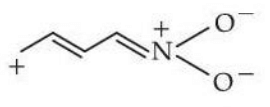
  • A
    Resonance structure showing a conjugated carbon chain attached to a positively charged nitrogen with two oxygens, both oxygens negatively charged, and a positive charge at the left end.
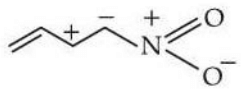
  • B
    Resonance structure showing an allylic carbon cation in the chain attached to nitrogen, with nitrogen positively charged, one oxygen double bonded and one oxygen negatively charged.
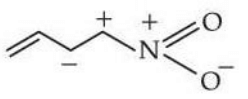
  • C
    Resonance structure showing adjacent positive charges on carbon and nitrogen, a negative charge on a nearby carbon, and one oxygen double bonded with one oxygen negatively charged.
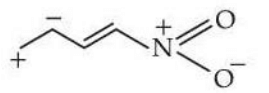
  • D
    Resonance structure showing a negative charge on the left carbon, a positive charge on the adjacent terminal carbon, conjugation toward a positively charged nitrogen, and one oxygen negatively charged.

Answer

Correct answer:D

Step-by-step solution

Standard Method

Given: Four resonance structures are shown.

Find: The least stable structure.

From the solution, the stability rules for resonance are:

  1. Structures with more covalent bonds and complete octets are more stable.
  2. Charge placement matters, but octet completion has higher priority.
  3. A structure with a complete octet on electronegative atoms is preferred over one with incomplete octets.
  4. The least stable structures are those with incomplete octets on electronegative atoms or with unfavorable charge distribution such as like charges on adjacent atoms.

The solution explicitly concludes that the correct option is D.

Therefore, the least stable structure is option D.

Common mistakes

  • Focusing only on where the positive charge is placed and ignoring the octet rule. This is wrong because resonance stability is governed first by octet completion. Check octets before comparing electronegativity effects.

  • Assuming all resonance structures contribute equally. This is wrong because structures with unfavorable charge separation or incomplete octets are much less stable. Compare bond count, octet completion, and charge distribution together.

  • Choosing a structure only because the charge appears delocalized. This is wrong because delocalization helps only when the resulting structure still satisfies major stability rules. Verify whether the delocalized form creates an especially unstable charged center.

Practice more Electronic Effects (Inductive, Resonance, Hyperconjugation) questions

Get unlimited AI-adaptive practice, mastery tracking, and an AI tutor that explains every step — free to start.

Related questions