
Resonance in can be represented as
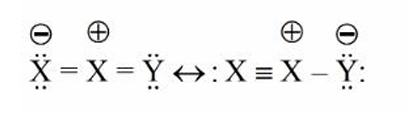
The enthalpy of formation of is , and the magnitude of resonance energy of is:
Resonance in can be represented as
The enthalpy of formation of is , and the magnitude of resonance energy of is:
Correct answer:98
Standard Method
Given: The enthalpy of formation of is . The resonance forms indicate delocalization and hence extra stabilization.
Find: The magnitude of the resonance energy of .
From the bond-energy calculation shown in the solution:
Therefore, the expected enthalpy of formation without resonance is
The actual enthalpy of formation is
So, the resonance energy is
Therefore, the magnitude of resonance energy is .
Bond Enthalpy Breakdown
Given:
Find: Resonance energy.
First calculate total bond breaking energy:
Now calculate total bond formation energy:
Hence, the hypothetical enthalpy of formation without resonance is
Because resonance stabilizes the molecule, the actual enthalpy is lower than this expected value. Thus,
Therefore, the required numerical value is 98.
Using the actual enthalpy of formation directly as the resonance energy is incorrect because resonance energy is the difference between the expected non-resonating value and the actual value. First calculate the expected enthalpy, then subtract the actual enthalpy.
Ignoring the bond-breaking and bond-forming sign convention leads to a wrong expected enthalpy. Add energies required to break bonds, subtract energies released on bond formation, and only then compare with the actual enthalpy.
Forgetting the stoichiometric factor for the bond gives the wrong input energy. Use , not the full bond enthalpy.
Get unlimited AI-adaptive practice, mastery tracking, and an AI tutor that explains every step — free to start.