
The steam volatile compounds among the following are:
- A
and Only
- B
and Only
- C
and Only
- D
and Only
The steam volatile compounds among the following are:
and Only
and Only
and Only
and Only
Correct answer:A
Standard Method
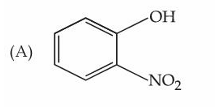
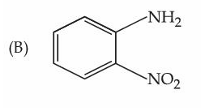
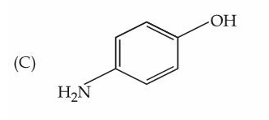
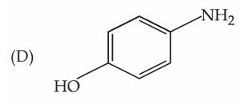
Given: Four aromatic compounds , , , and are given.
Find: Which compounds are steam volatile.
Steam volatile compounds are generally low-boiling compounds that can vaporize and mix with steam at low temperatures.
The deciding factor here is the type of hydrogen bonding present.
From the given structures:
Therefore, the steam volatile compounds are and only.
The correct option is A.
Hydrogen Bonding Based Analysis
Given: Steam distillation is possible for compounds that are volatile in steam and sufficiently less associated.
Find: Which of the given compounds are steam volatile.
Step 1: Understand the concept of steam volatility.
Steam distillation is used to separate or purify organic compounds that are volatile in steam and immiscible with water. Compounds that can undergo steam distillation are those which:
Step 2: Analyze the given compounds.
Step 3: Conclude.
Compounds and exhibit intramolecular hydrogen bonding, which lowers their effective intermolecular attraction and makes them volatile with steam. Compounds and exhibit intermolecular hydrogen bonding, leading to higher boiling points and non-volatility.
Therefore, the correct option is A.
Assuming all compounds containing or groups are non-volatile is incorrect. The key issue is not merely the presence of these groups, but whether they form intramolecular or intermolecular hydrogen bonding. First check the relative positions of substituents.
Ignoring ortho versus para substitution leads to the wrong conclusion. Ortho substitution can permit intramolecular hydrogen bonding, which reduces intermolecular association. Para substitution generally cannot do this and often favors intermolecular hydrogen bonding instead.
Treating steam volatility as identical to ordinary volatility is incomplete. In such questions, compounds suitable for steam distillation are typically less associated and must have sufficient vapor pressure near . Use hydrogen bonding and association to judge steam volatility.
Get unlimited AI-adaptive practice, mastery tracking, and an AI tutor that explains every step — free to start.