
The IUPAC name of the following compound is:
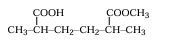
- A
2-Carboxy-5-methoxycarbonylhexane
- B
Methyl-6-carboxy-2,5-dimethylhexanoate
- C
Methyl-5-carboxy-2-methylhexanoate
- D
6-Methoxycarbonyl-2,5-dimethylhexanoic acid
The IUPAC name of the following compound is:
2-Carboxy-5-methoxycarbonylhexane
Methyl-6-carboxy-2,5-dimethylhexanoate
Methyl-5-carboxy-2-methylhexanoate
6-Methoxycarbonyl-2,5-dimethylhexanoic acid
Correct answer:D
Standard Method
Given: A compound structure is shown.
Find: The correct IUPAC name of the compound.
Identify the longest carbon chain: The parent chain contains carbon atoms, so the parent hydrocarbon is hexane.
Identify the principal functional group: The structure contains a carboxylic acid group and a methoxycarbonyl group. The carboxylic acid group has higher priority, so the parent name must end with hexanoic acid.
Number the chain: Numbering starts from the end nearest the carboxylic acid group, so that group is at carbon .
Locate substituents: The methoxycarbonyl group is at carbon , and the methyl groups are at carbons and .
Construct the name: Combining the substituents with the parent name gives 6-Methoxycarbonyl-2,5-dimethylhexanoic acid.
Therefore, the correct option is D.
Choosing the ester part as the principal functional group is incorrect because carboxylic acid has higher IUPAC priority. Always assign the suffix to the highest priority functional group first.
Numbering the chain from the wrong end gives incorrect locants for the substituents. Start numbering from the end nearest the group.
Treating methoxycarbonyl as part of the main chain is incorrect here. It must be named as a substituent because the parent chain is based on the carboxylic acid-containing chain.
Get unlimited AI-adaptive practice, mastery tracking, and an AI tutor that explains every step — free to start.