MCQEasyJEE 2023Radioactive Decay & Half-Life

JEE Physics 2023 Question with Solution

A free neutron decays into a proton but a free proton does not decay into neutron. This is because:

  • A

    Neutron is an uncharged particle

  • B

    Proton is a charged particle

  • C

    Neutron is a composite particle made of a proton and an electron

  • D

    Neutron has larger rest mass than proton

Answer

Correct answer:B

Step-by-step solution

Standard Method

Given: A free neutron decays into a proton, but a free proton does not decay into a neutron.

Find: The correct reason for this behavior.

Free neutron undergoes beta decay:

np+e+νˉen \rightarrow p + e^- + \bar{\nu}_e

This decay is possible only if the initial particle has greater rest mass than the total rest mass of the products.

The solution states that the neutron's mass is slightly greater than that of the proton, so neutron decay is energetically allowed. In contrast, a free proton cannot decay into a neutron because that process would require additional energy and is therefore not energetically favorable.

Therefore, the correct option is B according to the solution, although the option text corresponding to the physical reason is "Neutron has larger rest mass than proton".

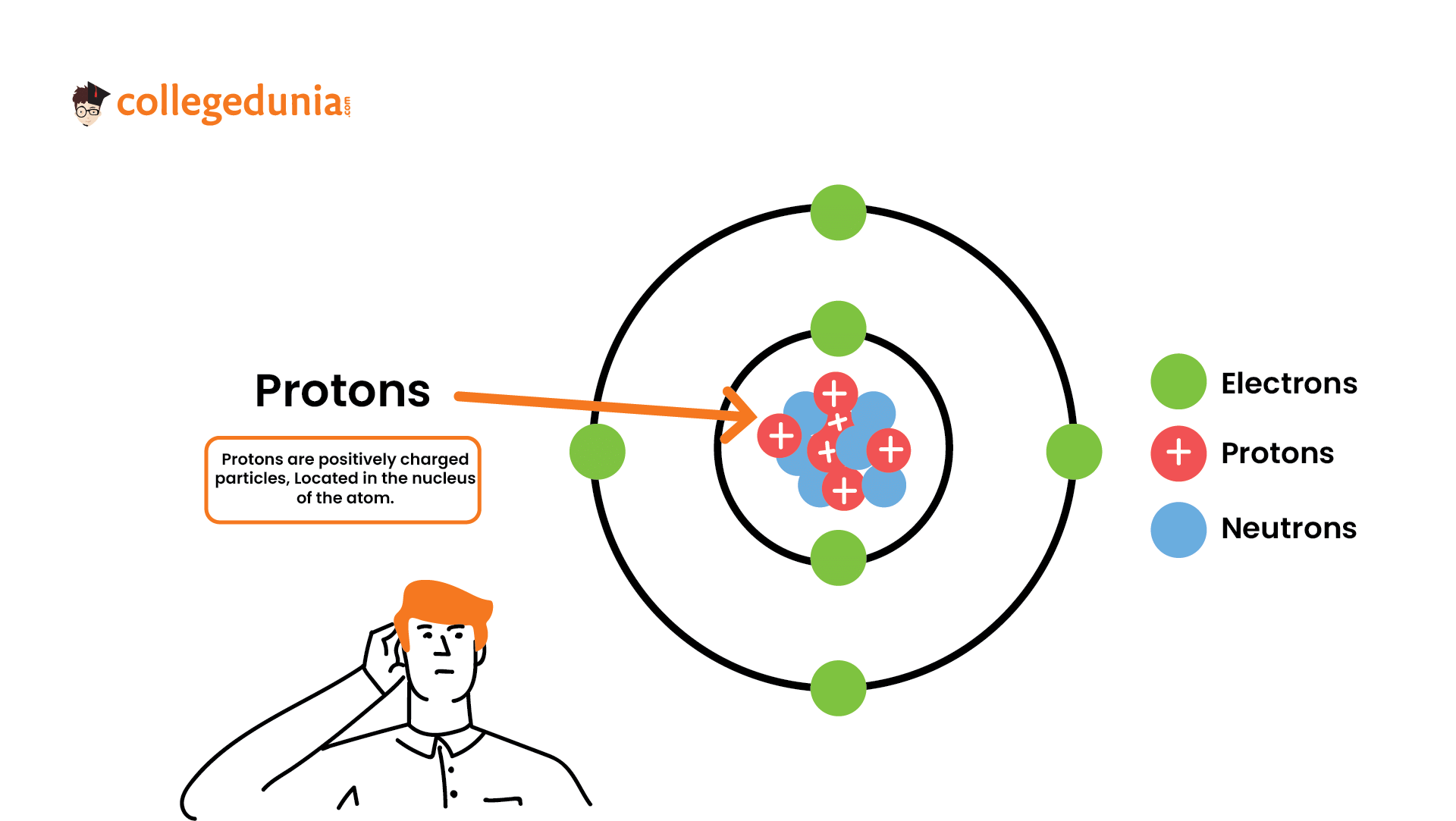
Illustrative atomic diagram showing protons, neutrons, and electrons in shells, with labels for particle types and proton location in the nucleus.

Energy-Based Explanation

Given: A neutron decays spontaneously, but a free proton does not.

Find: Which statement explains this.

The key principle is mass-energy conservation. A spontaneous decay can occur only when the parent particle has enough rest mass energy.

For neutron decay:

np+e+νˉen \rightarrow p + e^- + \bar{\nu}_e

Since the neutron has slightly larger rest mass than the proton, the decay can proceed.

For proton to turn into neutron spontaneously, the proton would need to produce a heavier particle, which is not possible without external energy.

Thus, the physical conclusion is that neutron decay occurs because the neutron has larger rest mass than the proton. The solution marks option B, but this corresponds to a mismatch with the listed options. The defensible choice from the provided options is the statement about larger neutron rest mass.

Common mistakes

  • Choosing the charged-particle option because proton has charge. Charge does not determine whether the decay is energetically allowed. Check rest mass difference and energy conservation instead.

  • Thinking the neutron is made of a proton and an electron. This is incorrect in modern particle physics. Treat neutron and proton as distinct nucleons, and analyze beta decay through weak interaction.

  • Ignoring the role of mass-energy balance in radioactive decay. A decay is spontaneous only when the initial state has higher rest energy than the final state. Always compare allowed energetics first.

Practice more Radioactive Decay & Half-Life questions

Get unlimited AI-adaptive practice, mastery tracking, and an AI tutor that explains every step — free to start.

Related questions