
Find out the major products from the following reaction sequence:
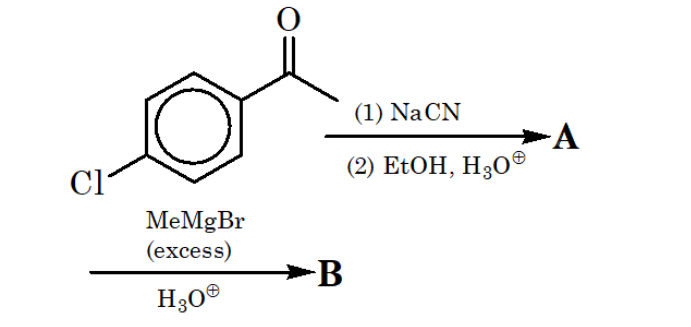
- A
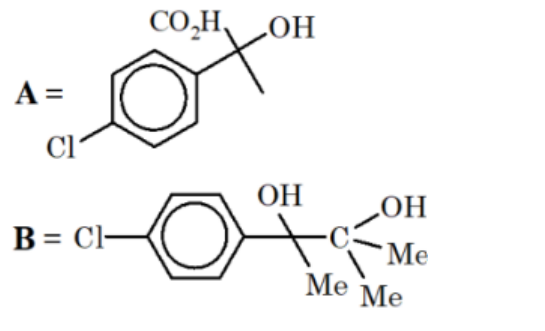
- B
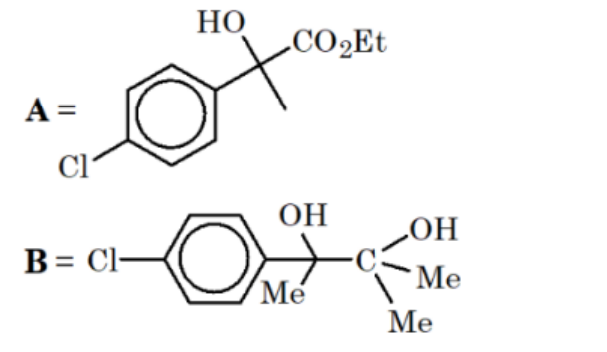
- C
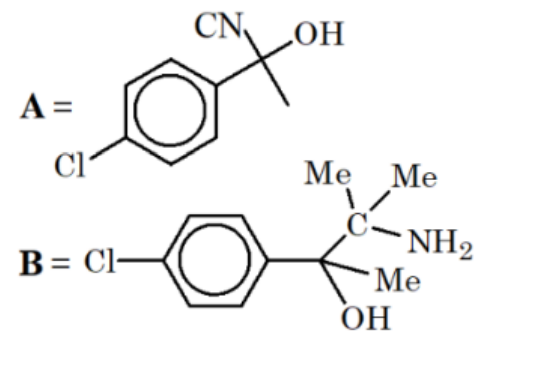
- D
Find out the major products from the following reaction sequence:
Correct answer:D
Standard Method
Given: The substrate undergoes two separate reaction sequences to form A and B.
Find: The major products corresponding to A and B.
From the extracted solution:
Therefore, the correct option is D.
Explanation from Reaction Pattern
Given: The first sequence uses followed by acidic conditions, and the second uses excess followed by .
Find: Which option shows the final major products.
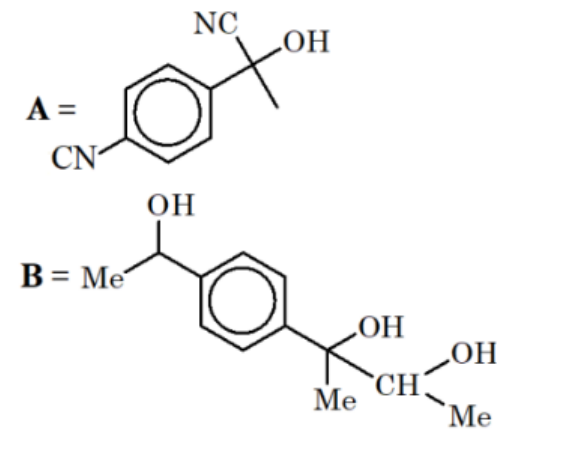
The solution text states that cyanide attacks the carbonyl carbon to give a cyanohydrin intermediate. It then identifies the final major products as those shown in option (4). Since option numbering maps as , , , , the answer is D.
Thus, the major products are those drawn in option D.
Assuming substitutes the aryl chlorine directly is incorrect here because the solution indicates cyanohydrin formation at the carbonyl group. Focus first on nucleophilic addition to the ketone carbonyl.
Treating the first intermediate as unchanged cyanohydrin without following the full sequence can lead to the wrong option. Track both reagents in order and match the final product set, not only the first intermediate.
Ignoring that A and B are formed by two different reaction paths is a conceptual error. Read the scheme carefully and identify the product of each branch separately before selecting an option.
Get unlimited AI-adaptive practice, mastery tracking, and an AI tutor that explains every step — free to start.