
The angle of projection of a particle is measured from the vertical axis as and the maximum height reached by the particle is . Here as function of can be presented as
- A
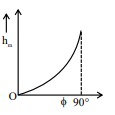
- B
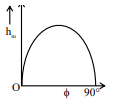
- C
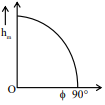
- D
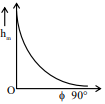
The angle of projection of a particle is measured from the vertical axis as and the maximum height reached by the particle is . Here as function of can be presented as
Correct answer:C
Standard Method
Given: The angle of projection is measured from the vertical as , and the maximum height is .
Find: The correct graph of as a function of .
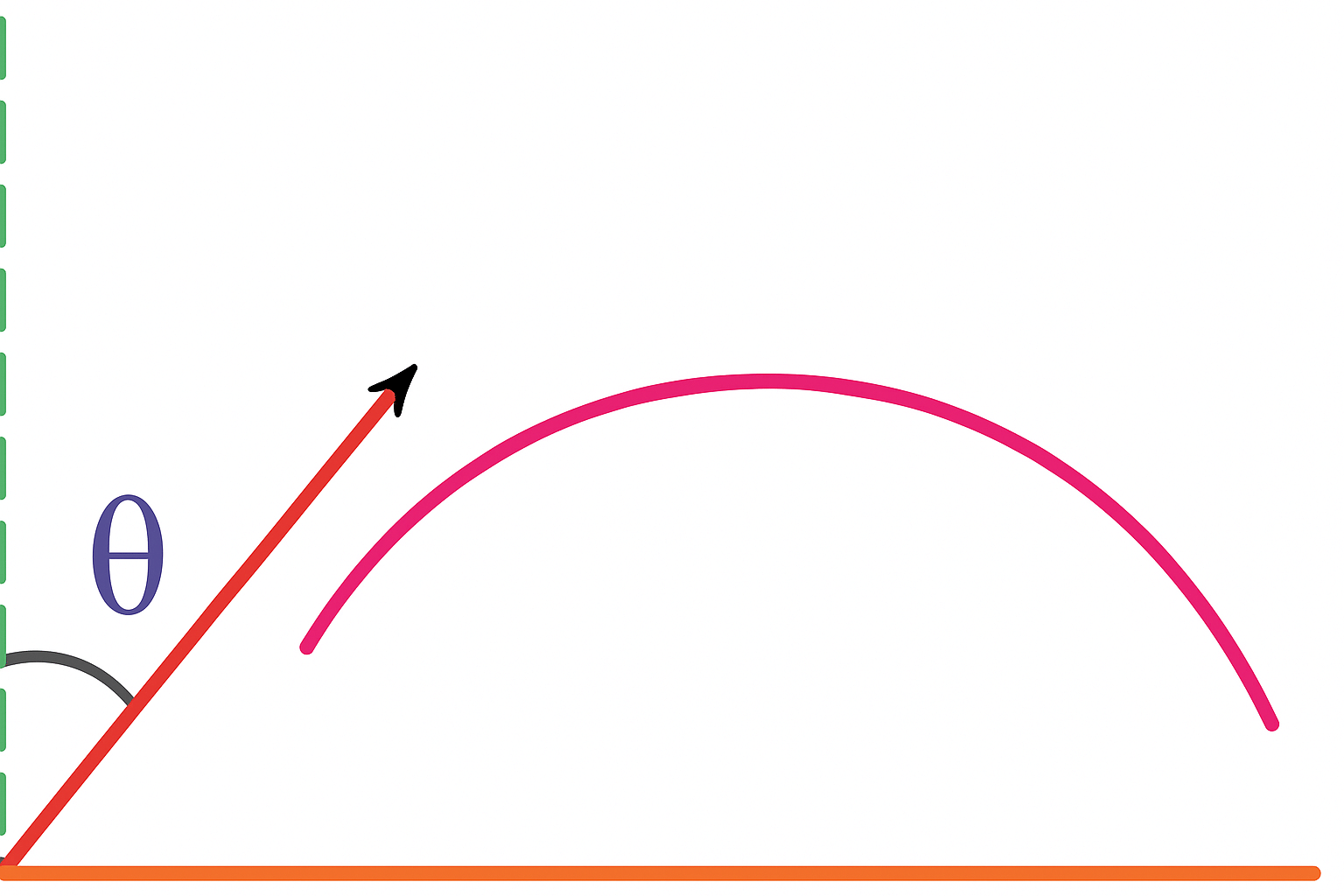
For projectile motion, maximum height depends on the initial vertical component of velocity.
Since the angle is measured from the vertical, the vertical component is .
Using the maximum height formula,
Therefore,
As increases from to , decreases from to . Hence decreases continuously from its maximum value to zero.
Therefore, the correct option is C.
Angle Conversion Method
Given: The projectile is projected at angle with the vertical.
Find: The relation between and .
The standard formula for maximum height when the projection angle with the horizontal is is
Here, the angle is given with the vertical, so
Substituting this into the formula,
Using
we get
Thus decreases from maximum at to zero at , which matches Option C.
Using as the vertical component is incorrect because is measured from the vertical, not the horizontal. Use instead.
Choosing a graph that rises first and then falls is incorrect because decreases monotonically on . The height does not increase with in this interval.
Confusing the standard angle with the given angle leads to a wrong substitution. First write before applying the projectile formula.
Get unlimited AI-adaptive practice, mastery tracking, and an AI tutor that explains every step — free to start.